
Dental Bridges in Downtown Vancouver
Dental Bridges Near You
A missing tooth can affect more than the appearance of your smile. It may change the way you chew, speak, or bring your teeth together. At Terminal City Dental, we provide dental bridges in Downtown Vancouver to replace one or more missing teeth with a fixed restoration.
Bridge treatment usually requires more than one appointment, so a convenient location can make the process easier to manage. If you are looking for dental bridges near you, our downtown clinic gives you access to consultations, treatment, and follow-up care without a long commute.
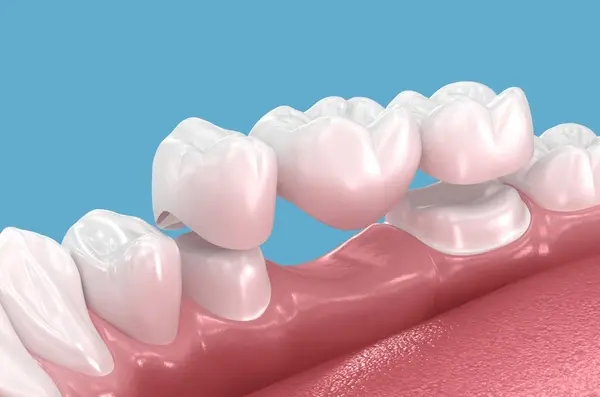
What Are Dental Bridges?
A dental bridge is a fixed restoration that fills a space left by one or more missing teeth. It includes one or more artificial teeth supported by natural teeth, implants, or a combination of both. A bridge can restore the visible gap and help prevent nearby teeth from shifting out of position.
If you are looking for a dentist in Downtown Vancouver for a dental bridge, our team can examine the gap, supporting teeth, gums, and bite to determine whether this option may work for you.
What Types of Dental Bridges Do We Offer?
At Terminal City Dental, we offer the following options for dental bridges in Downtown Vancouver, depending on your oral health:
Traditional bridges
A replacement tooth is supported by crowns placed on natural teeth on both sides of the gap.
Cantilever bridges
The artificial tooth is supported from one side when only one suitable supporting tooth is available.
Maryland bridges
A framework attached behind nearby teeth supports the replacement tooth, often with less alteration to the supporting teeth.
Implant-supported bridges
Dental implants support the bridge when several adjacent teeth are missing.
Each design has different requirements. We will explain which options are suitable after assessing the location of the gap and the condition of the surrounding structures.
When Might You Need a Dental Bridge?
A bridge may be considered if you have:
One or more missing teeth
Difficulty chewing in the affected area
Changes in speech caused by a gap
Nearby teeth beginning to shift
An uneven or uncomfortable bite
A preference for a fixed replacement
Healthy teeth or implants that can support the bridge
Consider visiting a dentist near you for an examination to determine whether a dental bridge is suitable for your needs.

What Are the Benefits of Dental Bridges?
Depending on the design and location, a bridge may:
Restore chewing function
Replacing missing teeth can make eating more comfortable.
Improve speech
Filling a gap may make certain words easier to pronounce.
Maintain tooth positions
A bridge can help limit movement of nearby teeth into the empty space.
Create a complete appearance
The replacement tooth is shaped and shaded to complement your smile.
Provide fixed support
Unlike a removable appliance, the bridge stays in place during daily activities.
Distribute biting pressure
A well-fitted restoration can help balance forces across the supporting teeth.
We provide dental bridges near you to restore missing teeth and make ongoing care easier to access.
What to Expect During the Dental Bridge Process
The steps depend on the type of bridge and the health of the supporting teeth. When providing dental bridges in Downtown Vancouver, we follow a careful process to support your comfort and treatment goals:
Initial assessment
We discuss your concerns, dental history, health conditions, and treatment preferences.
Oral examination
We check the gap, nearby teeth, gums, bite, and existing dental work.
Treatment planning
We explain the recommended bridge, alternatives, expected timeline, and fees.
Tooth preparation
For a traditional bridge, we carefully reshape the supporting teeth to make room for crowns.
Dental impressions
We take scans or impressions so the restoration can be made to fit your mouth.
Temporary protection
We may place a temporary bridge while the final restoration is being created.
Final placement
We check the fit, appearance, and bite before securing the completed bridge.
How to Care for a Dental Bridge
A bridge cannot develop a cavity, but the supporting natural teeth remain vulnerable to decay and gum problems. Daily care is important:
Brush twice daily
Clean the bridge, supporting teeth, and gumline with a soft-bristled toothbrush.
Clean underneath
Use floss threaders, interdental brushes, or another recommended tool beneath the artificial tooth.
Limit hard foods
Avoid chewing ice, hard candies, or other items that may damage the restoration.
Protect against grinding
Wear a nightguard if one has been recommended.
Attend regular visits
Let us monitor the bridge, bite, gums, and supporting teeth.
Report changes
Contact us if the bridge feels loose, painful, rough, or difficult to clean.
Why Choose Terminal City Dental for Dental Bridges?
At Terminal City Dental, we understand that replacing a tooth is an important decision. We take time to explain the available choices and how each one may affect your oral health.
When you visit our clinic for bridge treatment, you can expect:
Careful evaluation
We assess the supporting teeth and gums before recommending a bridge.
Honest guidance
We discuss the advantages, limitations, and alternatives clearly.
Individual planning
We consider your bite, smile, oral health, and personal preferences.
Natural-looking design
We select a shape and shade that complement nearby teeth.
A comfortable approach
We work at a steady pace and respond to sensitivity or anxiety.
Continued support
We check the bridge during future visits and help you care for it properly.
Restore the Gap in Your Smile
Replacing a missing tooth can improve daily comfort and help protect the alignment of your remaining teeth. At Terminal City Dental, we offer dental bridges near you to restore suitable gaps with a secure, natural-looking option.
Call us or visit us today to schedule a dental bridge consultation.
FAQs
Can a bridge be placed immediately after a tooth is removed?
Sometimes a temporary replacement can be planned right away, but the timing of the final bridge depends on healing, the condition of the supporting teeth, and the treatment approach.
Can food become trapped beneath a dental bridge?
Yes. Food and plaque can collect underneath the artificial tooth. Special flossing tools or small interdental brushes can help keep this area clean.
Will a dental bridge feel like a natural tooth?
A properly fitted bridge should feel stable and allow comfortable chewing. It may take a short time for your tongue and bite to adjust to the restoration.
Can a damaged dental bridge be repaired?
Minor damage may sometimes be repaired, but a loose, cracked, or extensively worn bridge may need replacement. An examination is required to determine the best option.
How long can a dental bridge last?
Its lifespan depends on the materials, condition of the supporting teeth, bite forces, grinding habits, and daily care. Regular examinations can help identify wear or problems early.