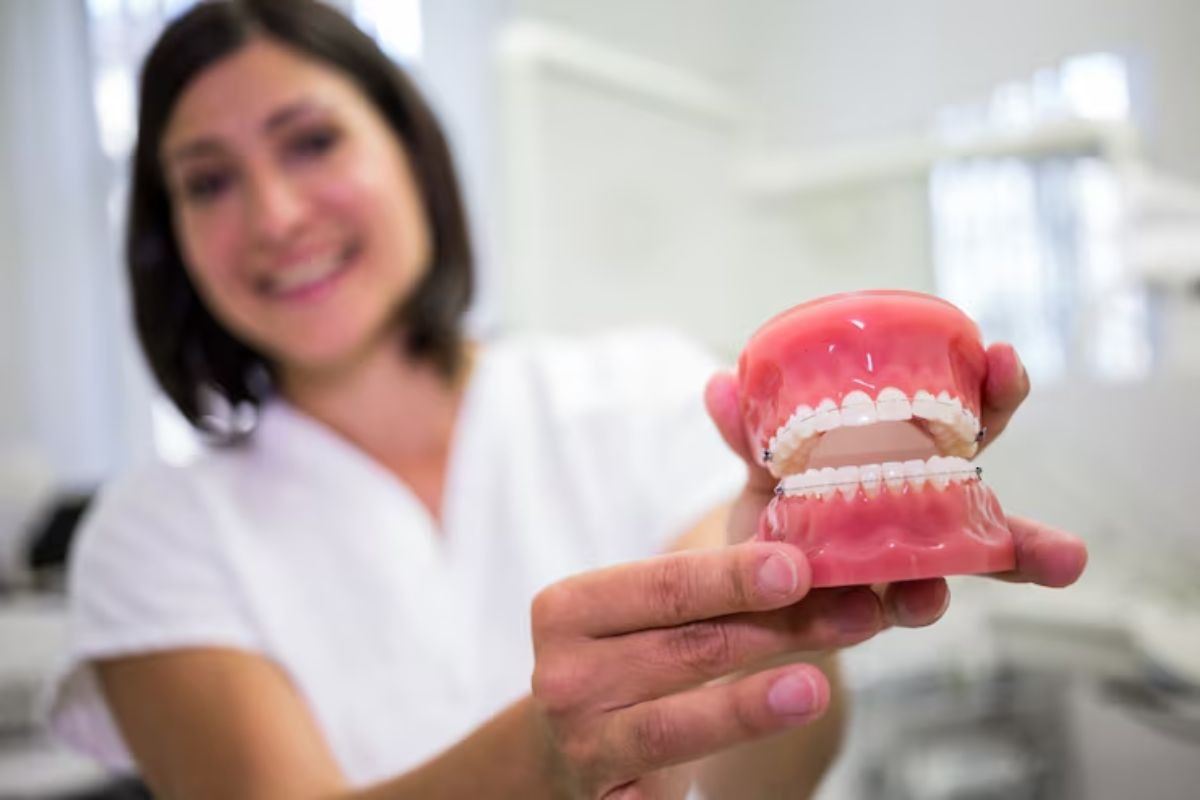
A missing tooth can change the way your smile looks and may make everyday activities like chewing more challenging. While looking at replacement options, you may ask, “What are dental bridges and how do they work?” A dental bridge replaces the space left by one or more missing teeth and stays fixed in the mouth. It is designed to bring back function while giving your smile a more complete, natural appearance.
What Is a Dental Bridge?
A dental bridge replaces one or more missing teeth by placing an artificial tooth, called a pontic, in the open space. The restoration is supported by neighbouring teeth, dental crowns, or dental implants, depending on the type of bridge being used.
A dental bridge for missing teeth is custom-made to fit your mouth. Its shape, size, and appearance are planned to help it blend naturally with the surrounding teeth.
Unlike removable dentures, traditional bridges stay in place and are not removed for daily cleaning.
How Does a Dental Bridge Work?
For a traditional bridge, the teeth on either side of the missing tooth are prepared to support dental crowns. These crowns are connected to the replacement tooth that fills the gap.
The bridge is then securely placed so the replacement tooth sits naturally within your smile.
When considering dental bridges, your dentist will first examine your teeth, gums, and bite to determine whether this type of restoration is appropriate for you.
Why Replace a Missing Tooth?
It may be tempting to leave a gap when a missing tooth is not easily visible. However, every tooth plays a role in supporting your bite and helping you chew.
Replacing a missing tooth may help:
- Restore your ability to chew comfortably
- Fill a visible space in your smile
- Support clearer speech
- Help maintain proper tooth alignment
- Distribute biting pressure more evenly
The right replacement option depends on where the tooth is missing, the condition of surrounding teeth, and your overall oral health.
What Are the Different Types of Dental Bridges?
Not every bridge is designed the same way. Your dentist will recommend an option based on the location of the missing tooth and the support available around it.
Common types include:
Traditional Dental Bridges
These bridges use crowns placed on teeth on both sides of the gap to support the replacement tooth.
Cantilever Bridges
A tooth supports a cantilever bridge on only one side of the missing space. It is suitable only in certain situations.
Implant-Supported Bridges
These restorations use dental implants for support instead of relying entirely on neighbouring natural teeth.
A comprehensive dental care can explain which option may be appropriate after carefully examining your mouth.
What Happens When Getting a Dental Bridge?
The process usually begins with a dental examination. Your dentist evaluates the missing area and checks the health of the teeth that may support the bridge.
If a traditional bridge is recommended, the supporting teeth are prepared before impressions or digital scans are taken. These records are used to create a restoration that fits your bite and smile.
Once the final bridge is ready, your dentist checks its fit and bite before securing it in position.
How Long Can a Dental Bridge Last?
The lifespan of a bridge varies from person to person. Daily oral hygiene, eating habits, the health of supporting teeth, and regular dental care can all affect how well it holds up over time.
If you are searching for a dentist near you, routine examinations are important after receiving a bridge. These visits allow your dentist to monitor the restoration and the teeth and gums supporting it.
How Do You Care for a Dental Bridge?
A dental bridge requires regular care just like your natural teeth. Keeping the area around and underneath the restoration clean is particularly important.
To care for your bridge:
- Brush twice a day.
- Clean under the bridge daily.
- Floss around nearby teeth.
- Avoid biting hard objects.
- Visit your dentist regularly.
Your dental team can show you suitable ways to clean around your restoration at home.
Restore the Space in Your Smile
A missing tooth can make eating, speaking, or smiling feel different. The right treatment can help restore your smile based on your dental needs.
Contact Terminal City Dental today to schedule a consultation and explore your tooth replacement options.
Frequently Asked Questions
Is a dental bridge removable?
No. Traditional dental bridges are fixed restorations that remain securely attached to their supporting teeth.
How many teeth can a bridge replace?
A bridge may replace one or several teeth, depending on available support and individual dental needs.
Does getting a dental bridge hurt?
Local anesthesia may be used during preparation to help keep you comfortable throughout the dental procedure.
Can I eat normally with a bridge?
Yes. After adjusting, most patients can enjoy many foods while following their dentist’s care recommendations.
Can cavities develop around a bridge?
Yes. Even with natural teeth, decay can still develop, making regular brushing and cleaning especially important.
How do I clean under a bridge?
Special flossing tools or interdental cleaners can help clean underneath your bridge and around supporting teeth.